Technology, Industry and Sovereignty: Four Events Shaping the Future
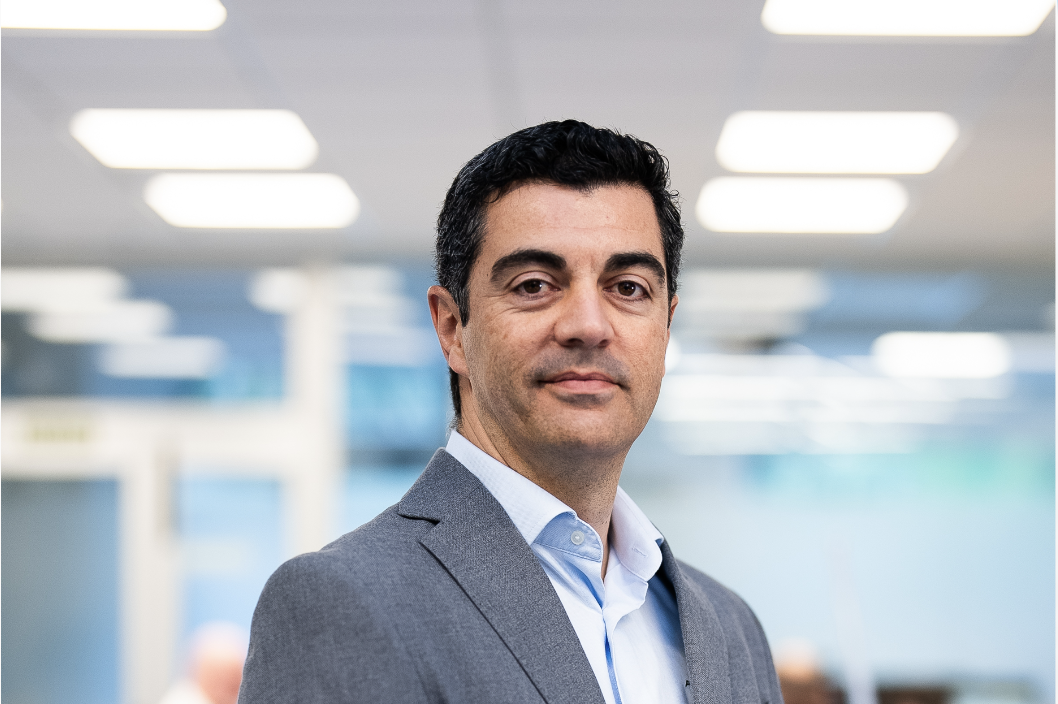
Manuel Lobeira, CEO.
Throughout September, ACORDE took part in several of Spain’s leading technology, defence and space forums: the 40th AMETIC Digital Economy and Telecommunications Conference, the 18th Space Seminar in Santander and New Space España 2026.
Although each event approached the subject from a different perspective, they all shared a common thread: the need to turn our technological capabilities into a strong, scalable industry that can contribute to the strategic autonomy of Spain and Europe.
Artificial intelligence as a force multiplier for talent
At the round table on “AI challenges in new relationship models and business competitiveness”, held as part of the AMETIC conference, the participating companies discussed how they are incorporating these tools into their operations.
One of the main benefits identified was AI’s ability to help mitigate talent shortages. When it is not possible to recruit every specialist required, artificial intelligence can provide valuable support with documentation and other auxiliary tasks, freeing up time for higher-value activities.
We also emphasised the importance of distinguishing artificial intelligence from process automation. The two areas are related, but they are not equivalent: not every automated process uses AI.
At ACORDE, artificial intelligence is not involved in our design processes, where much of our specialist knowledge and the technological advantage that creates a barrier to entry are concentrated. Its use is also managed through different security levels. When sensitive information is involved, companies can use their own infrastructure and internally deployed open-source models with no external connection.
Defence: between European scale and national sovereignty
During the session devoted to dual-use technologies and defence, we examined some of the main challenges facing Spain and Europe. One of the most prominent was the tension between European cooperation and each country’s determination to protect its national industrial sovereignty.
Large joint programmes require scale, coordination and substantial production volumes. In practice, however, individual countries tend to favour the involvement of their domestic suppliers. This duality can hinder the consolidation of genuinely European capabilities, slow the development of new technologies and reduce the competitiveness of European industry as a whole.
We also discussed the need to strengthen industrial capacity and shorten programme delivery times. In Spain, this challenge coincides with a change in Indra’s chairmanship and a period of corporate reorganisation. As the country’s leading national player, Indra is responsible for several strategic programmes and must reconcile the definition of its structure and strategy with the allocation of work among its subcontractors, at a time when agility and responsiveness are particularly important.
This is a complex context that must be approached with care, but also with realism. The success of these programmes will depend on our ability to coordinate every participant in the industrial supply chain effectively.
A space strategy based on priorities and predictable demand
These issues were explored further at the 18th Seminar, “Satellites as a Key Element for Defence and Government Applications”, held in Santander with ACORDE participating in its organisation.
During the round table on the current challenges and opportunities facing Spain’s space industry, we considered how public-private cooperation could be directed to maximise the return from major programmes such as SPAINSAT NG, SEOT, Galileo PRS and IRIS².
Although public institutions understandably wish to support every initiative, we must accept that no single country can secure every European programme. A de facto geographical balance exists, making it necessary to establish priorities. Industry and government must work together to identify which programmes —or which parts of them— are most important for Spain’s technological and industrial development, as well as for its defence, autonomy and strategic sovereignty.
This strategy must be supported by multiannual programmes and predictable demand. More than isolated subsidies, industry needs visibility. When a sizeable order and a prospect of continuity exist, companies can assume the technological risk associated with development, invest, train their teams and build the necessary capacity.
Strategic autonomy and industrial capability cannot suddenly be created when a need arises. They are the result of decisions, investments and work undertaken over the preceding years. Anticipation and a long-term outlook are therefore essential.
ACORDE’s experience also demonstrates that there is strong cooperation within Spanish industry. We have worked with every company represented on the panel. Nevertheless, international proposals and consortia could be strengthened by allocating leadership roles more effectively.
Technological capability, programme management expertise and financial capacity do not always reside in the same company. Distinguishing between these functions and assigning responsibilities according to each participant’s genuine strengths would allow us to build stronger, more competitive consortia.
From VLEO to the cislunar environment: markets at different stages of maturity
Our participation in New Space España 2026 allowed us to extend this discussion to the opportunities and technological challenges associated with new space architectures.
In the cislunar environment, the commercial case is not yet strong enough to mobilise industry decisively. For the time being, activity remains largely linked to scientific missions, pending the emergence of business models capable of generating sustained commercial demand.
The outlook is very different in LEO and VLEO, where future constellations represent a major opportunity. The large number of units required and, in some cases, the possibility of operating without the radiation-hardening requirements associated with other environments make industrialisation easier and open the market to new players.
Taking advantage of this opportunity will nevertheless require the ability to manufacture at scale while maintaining competitive quality and delivery times. ACORDE is responding to this challenge by expanding its industrial capabilities through a new facility, a larger workforce, professional training, process automation and the adoption of artificial intelligence tools wherever they can improve efficiency.
The discussion once again highlighted the issues of sovereignty and technological dependence. Europe has competitive capabilities and companies, but fragmentation between individual countries limits the scale that a genuine European single market for space and defence could achieve.
Overcoming this fragmentation will be essential if Europe is to compete internationally, reduce its dependence on external suppliers and turn its technological potential into a thriving, sustainable industry.
Building today the capabilities we will need tomorrow
The four events led to a shared conclusion. Possessing our own technology is not enough: we must turn it into industrial capability, support it with predictable demand and organise public-private cooperation around shared priorities.
Technological sovereignty does not mean producing everything in isolation. It means deciding which capabilities are critical and preserving and developing them within a more coordinated Europe. The decisions we make today will determine the freedom of action available to us in ten or fifteen years’ time.